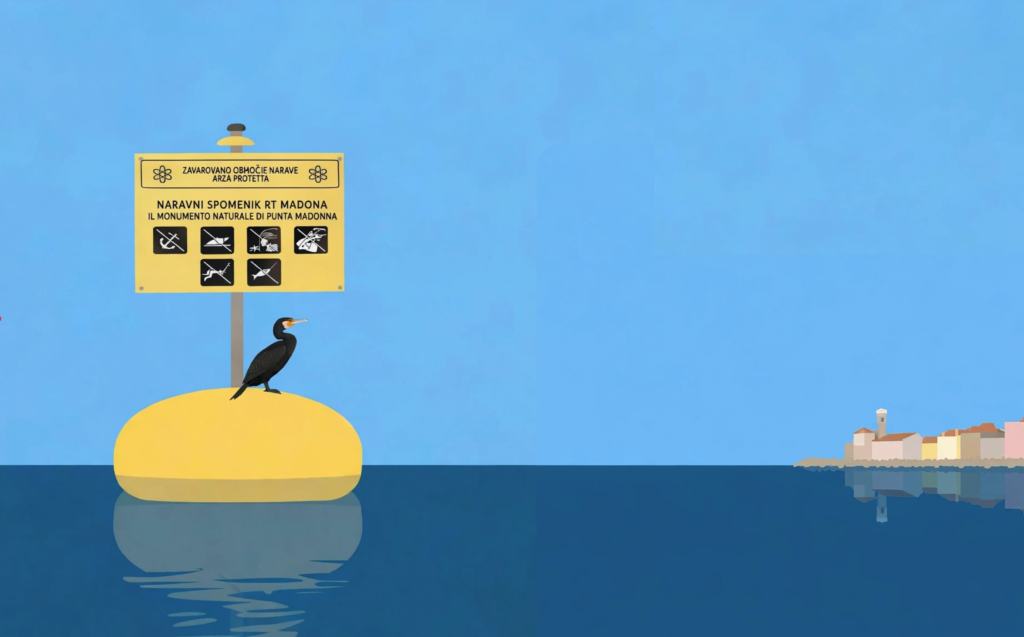
Beyond the visible horizon, where the Piran cape meets the sea, lies a mysterious underwater world. This is a kingdom of silence, where rich marine life thrives in the heart of the Adriatic.
The underwater world of Cape Madonna is a protected natural area
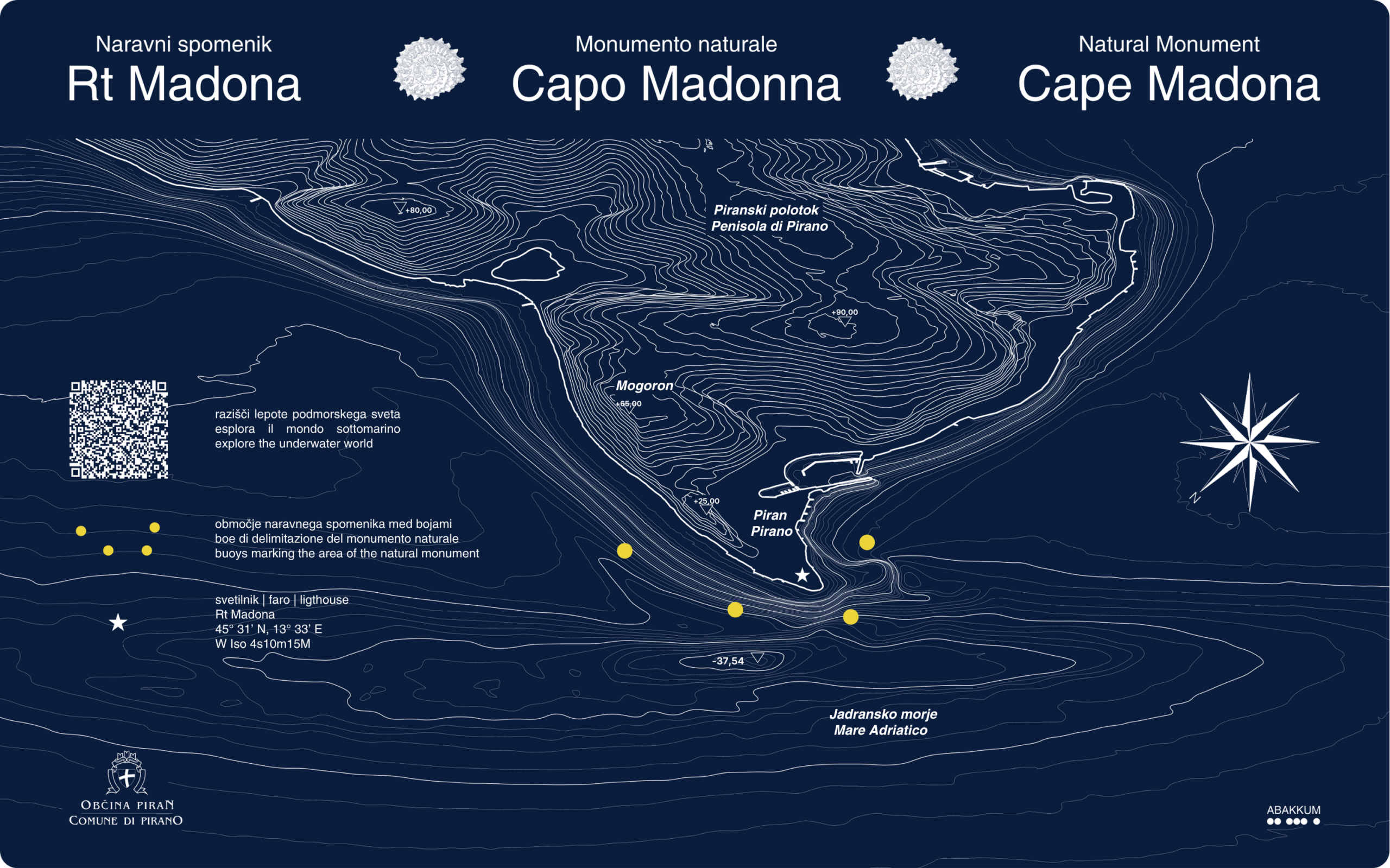
Cape Madonna natural monument
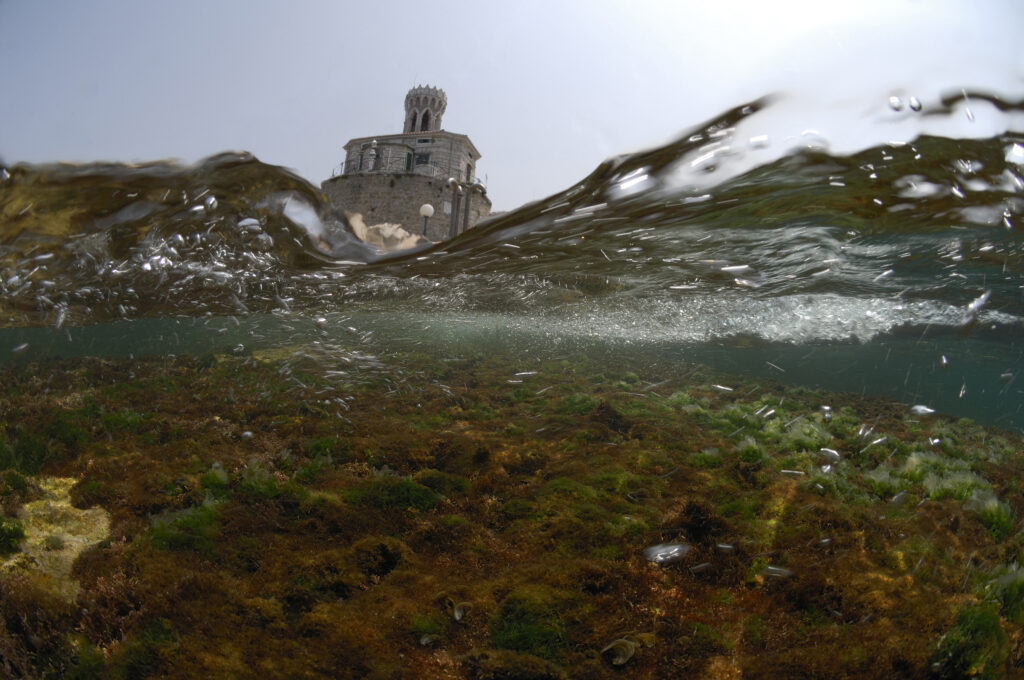
Cape Madona in Piran, also known among divers as Punta, is protected as a natural monument due to its exceptional underwater biodiversity. Cape Madona represents the westernmost extremity of the Piran Peninsula and acts as a natural boundary between the Gulfs of Koper and Piran within the broader Gulf of Trieste. Its northern section—extending from the cape itself to the end of the beach below Piran Church—is renowned for its outstanding marine life and diverse marine habitats. While the northern part attracts numerous divers and researchers, the southwestern section of the Piran coastline (stretching from Punta toward the main harbour) remains largely uncharted territory for scientists. Despite lying just steps away from the town, this underwater sector has received surprisingly little research attention.
Protected underwater world
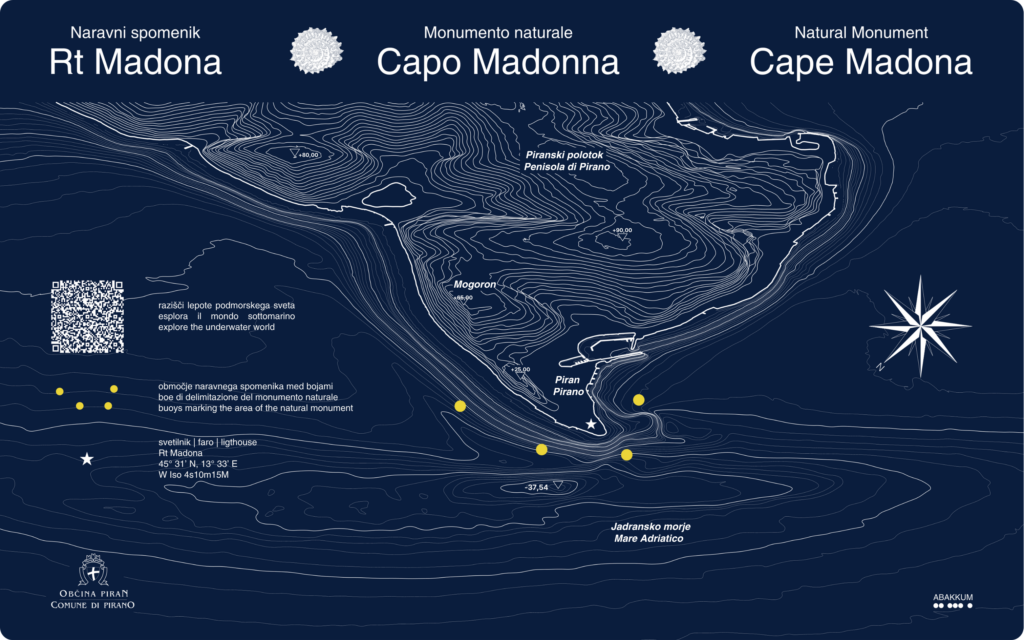
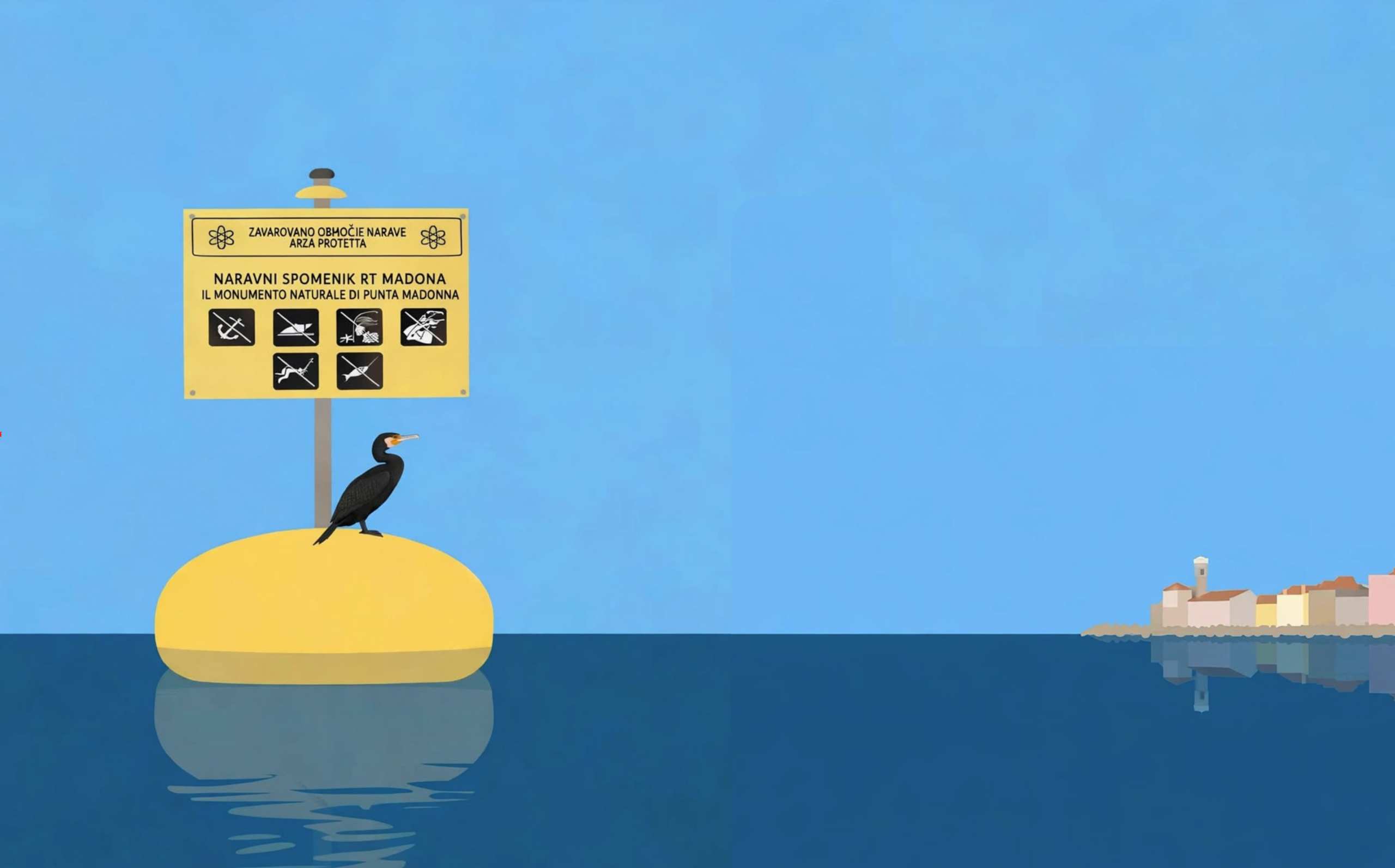
Cape Madona Natural Monument is located adjacent to the historic town centre of Piran. Unlike other protected areas in the Slovenian Sea, which are dominated by native flysch bedrock, the majority of the coastal zone—specifically the spray zone (supralittoral) and the intertidal zone (mediolittoral)—consists of anthropogenic, allochthonous limestone rocks that serve as a flood-protection breakwater. The marine protected area encompasses approximately 13 hectares (32 acres) of underwater ecosystem west of the Piran Peninsula and is demarcated by four yellow buoys positioned 100–200 metres from the shoreline. The northern section of the natural monument is predominantly rocky and covered with sandstone boulders, whereas the southern portion features a largely sandy substrate (locally referred to as the “Sahara”). Roughly 100 metres beyond the western boundary of the monument lies the deepest point of the Slovenian Sea, reaching a depth of 37.5 metres.
A natural monument is a protected area where motorised navigation, anchoring, harvesting marine organisms, and other disruptive activities are prohibited. Swimming and diving are permitted within the area.
Seabed
The coastal zone consists of boulders—large limestone and sandstone erratics—and long, rectangular sandstone slabs that slope evenly down to a depth of three or four metres, where the rocky bottom quickly drops off. In some places, this slope is fairly uniform, but at the very tip of the cape, the rocky seabed suddenly breaks into a near-vertical underwater wall. The large stacked rocks form a steep cliffside with numerous hidden recesses, such as underwater caves, burrows, overhangs, and crevices. These spaces represent important shaded microhabitats for marine organisms.
Biodiversity
The exceptional biological diversity at Cape Madona is the result of three interconnected ecological factors: a dense vegetative carpet of algae that provides food and shelter, a rugged seabed rich in rocky crevices, and a rapid drop-off in depth that alters light and temperature levels. All of this creates an exceptionally diverse array of habitats for numerous marine species within a very small area.
Flora
The coastal zone of Piran Punta is covered with dense vegetation of littoral algae, classified within the biocenosis of photophilic algae, which require high levels of light for their growth. While brown algae of the genus Cystoseira used to dominate, other species now prevail. The algal cover provides food for a diverse range of benthic invertebrates, such as snails, bivalves, and various types of tiny crustaceans, while simultaneously offering shelter and nesting sites for certain species of coastal fish, particularly wrasses (family Labridae).
At the stepped transition into the depths, where daylight begins to fade, a distinct type of algal vegetation appears. This is formed by so-called sciaphilic (shade-loving) coralligenous algae, which serve as important habitat builders. They create a unique habitat where the light is already dimmed, known as the precoralligen. The rocky boulders and sandstone rocks are covered by a red carpet of these algae, which thrive in low-light conditions. Such an environment stands out for the large number of benthic invertebrates that inhabit the surface of this carpet, as well as the burrows, crevices, cracks, and caves within it. Consequently, the precoralligen represents one of the most important habitats in the Mediterranean Sea.
Fauna
The rich algal cover on the boulders and rocks in the coastal zone, interspersed with patches of coarse sand, is inhabited by a diverse range of invertebrates. At Punta, the diversity of life is greater than anywhere else in the Slovenian Sea, making this environment a true educational resource for marine biology. Here, we can observe many different life strategies. In this regard, the true masters are the sea slugs and snails (Heterobranchia), which occur in a vast number of species and individuals. Some are brightly coloured, acting like traffic signs to warn predators that they are toxic or unpalatable.
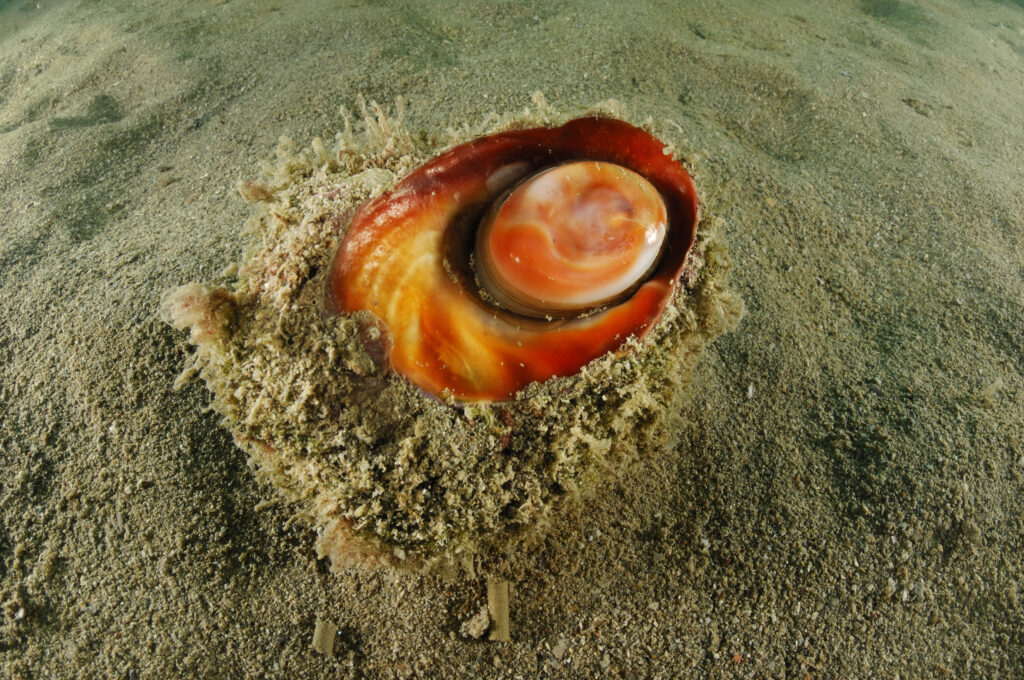
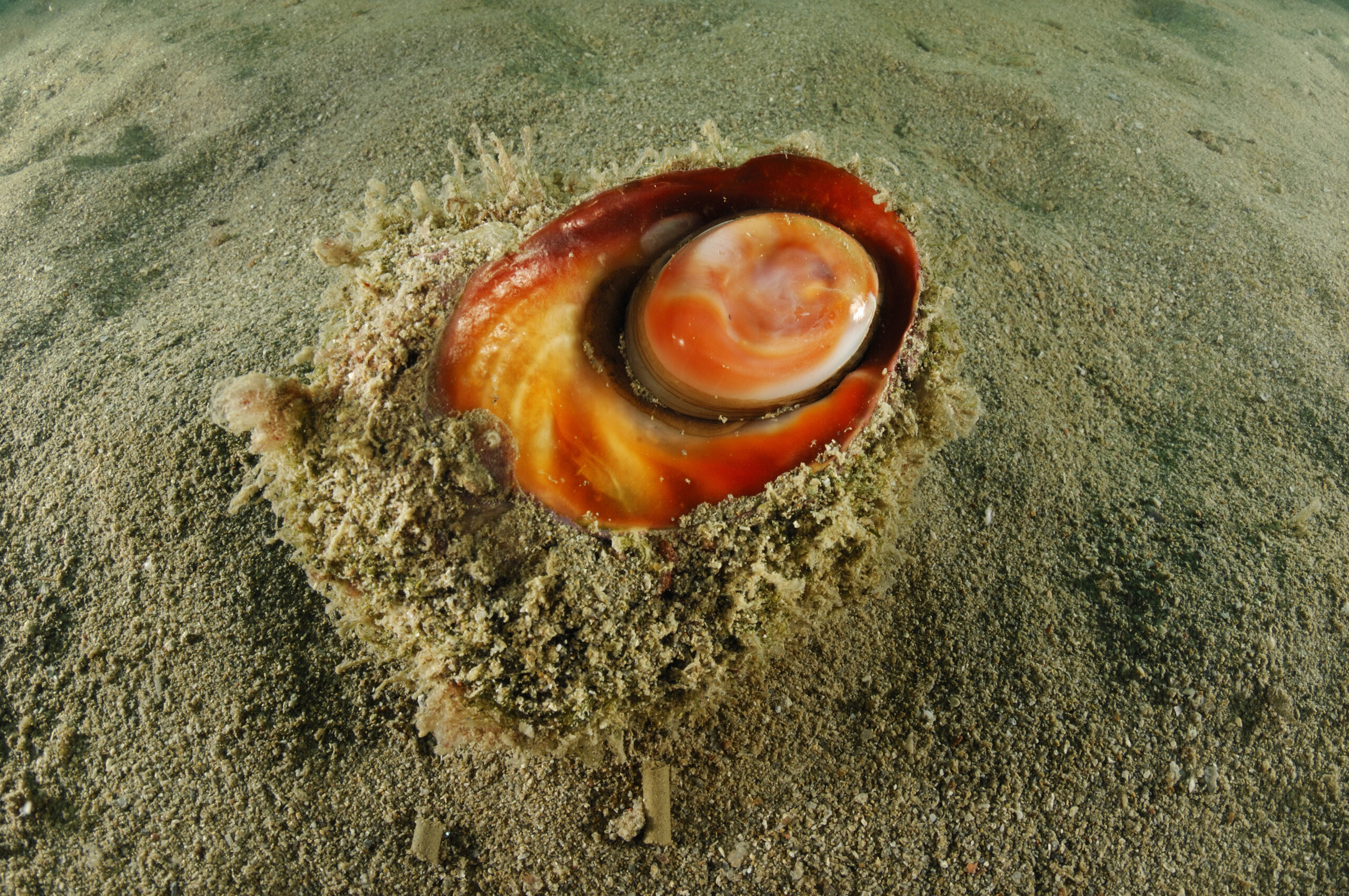
Still others mimic the coloration of toxic and unpalatable species, even though they themselves are edible. A third group relies on invisibility, simply mimicking the colours and patterns of their surroundings. One of the common snails in the underwater world of Punta is the rough star shell (Bolma rugosa), whose operculum is known locally as the “eye of St. Lucy.” It grazes on the dense algal vegetation atop the sandstone slabs and boulders. The underwater world of Piran Punta also attracts SCUBA divers due to its diverse fish community. In the coastal zone, wrasses (Labridae) build their nests either within the dense turf of algae, such as the ocellated wrasse (Symphodus ocellatus), or in the open, like the grey wrasse (Symphodus cinereus).
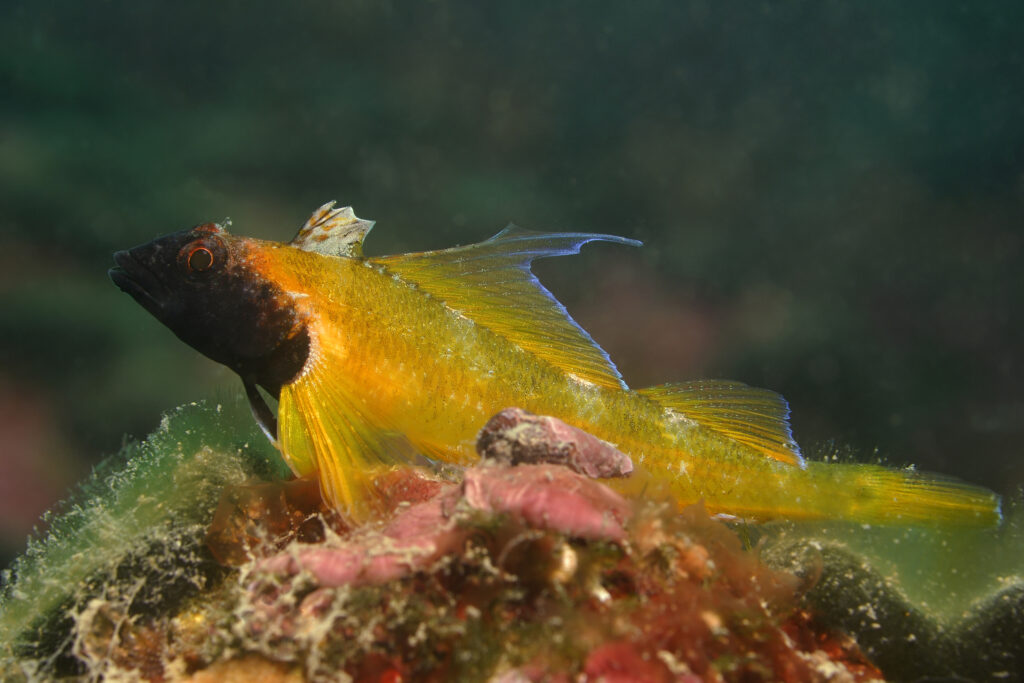
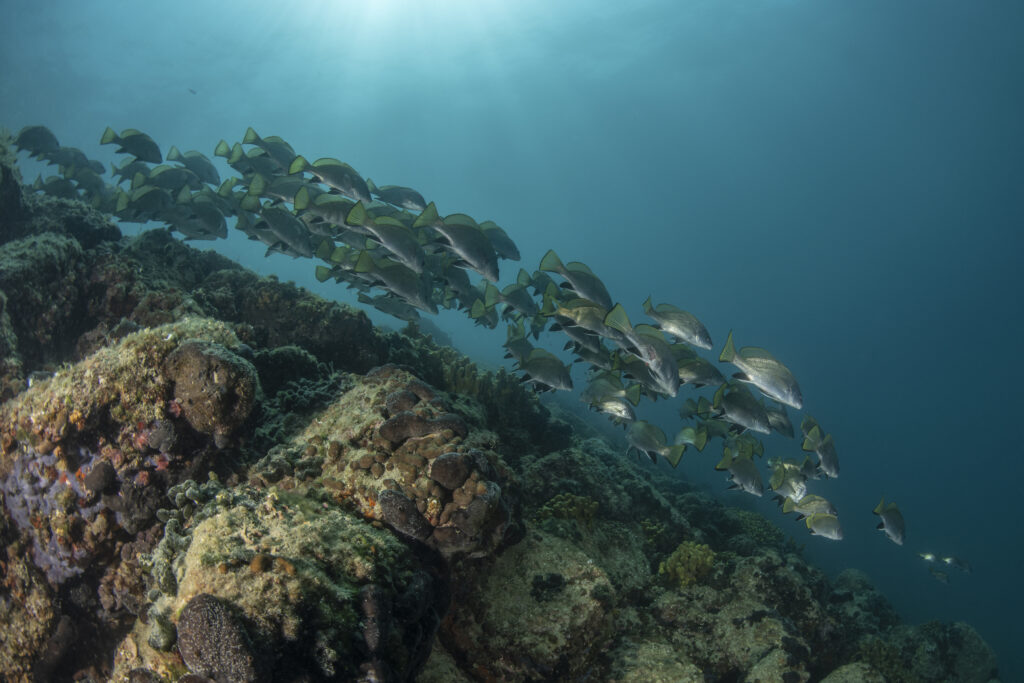
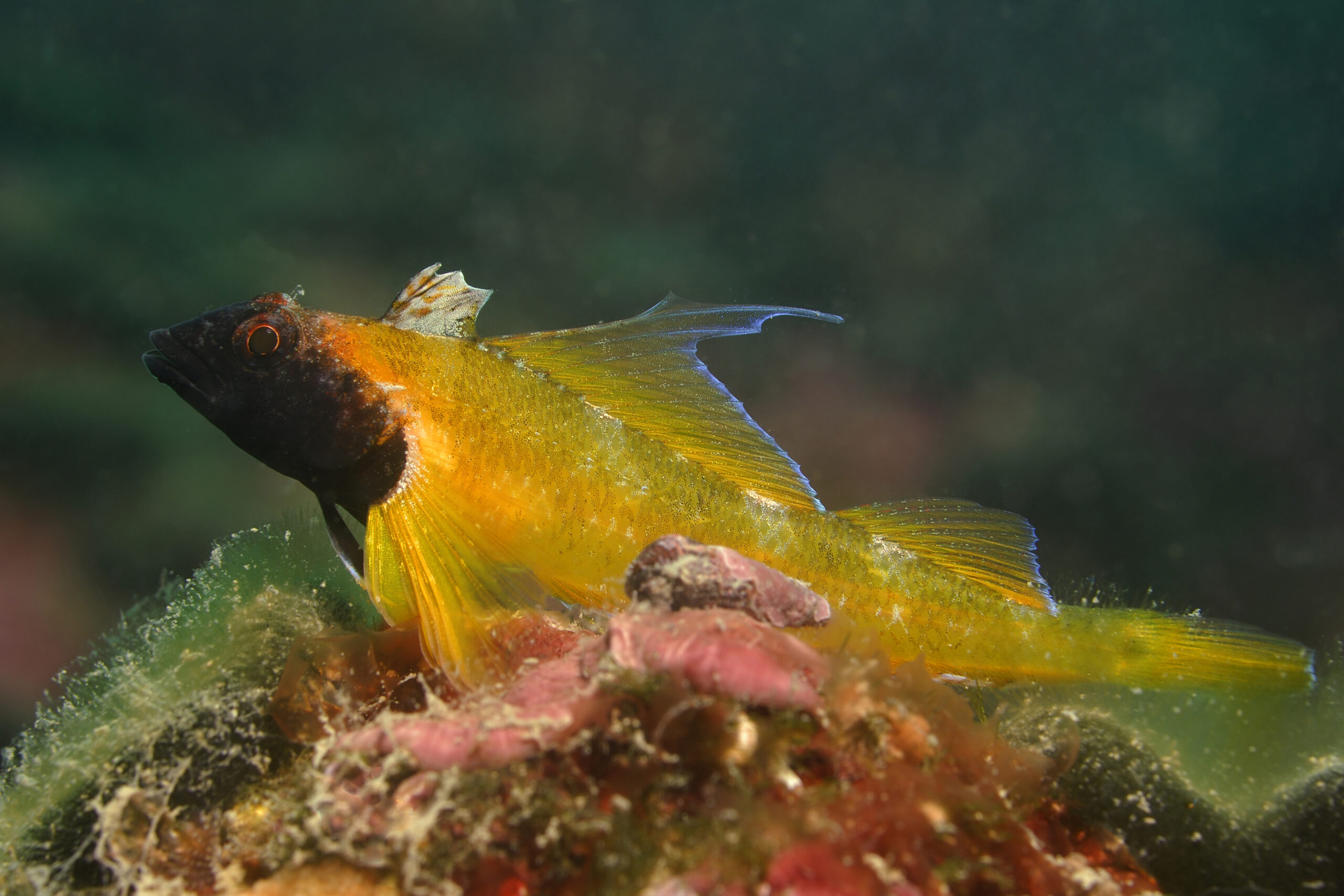
A frequent predator in this environment is the painted comber (Serranus scriba), which draws attention with its distinctively large, bright blue patch on its belly. The black-faced blenny (Tripterygion tripteronotus) and the yellow black-faced blenny (Tripterygion delaisi) serve as vivid reminders of how colourful the fish population around Piran’s Punta can be. Large schools of damselfish (Chromis chromis), which are characteristic reef fish, signal that we are approaching the terraced descent into the deep. Schools of various fish species, such as the two-banded seabream (Diplodus vulgaris), salema porgy (Sarpa salpa), and the aforementioned damselfish, swim freely throughout this marine protected area, as the natural monument is safely off-limits to destructive fishing nets.
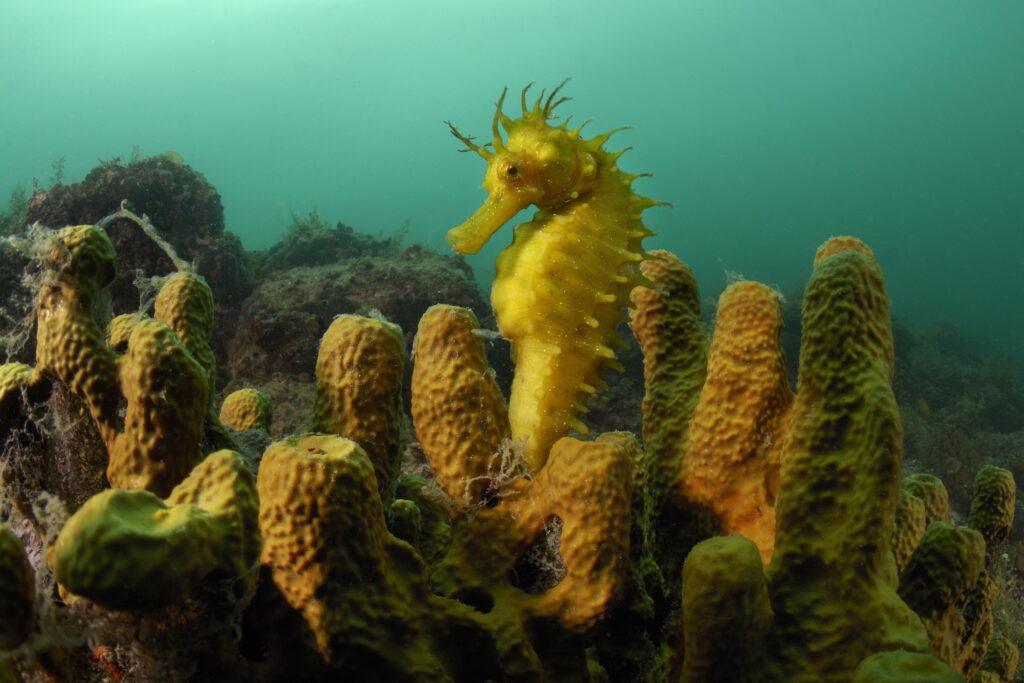
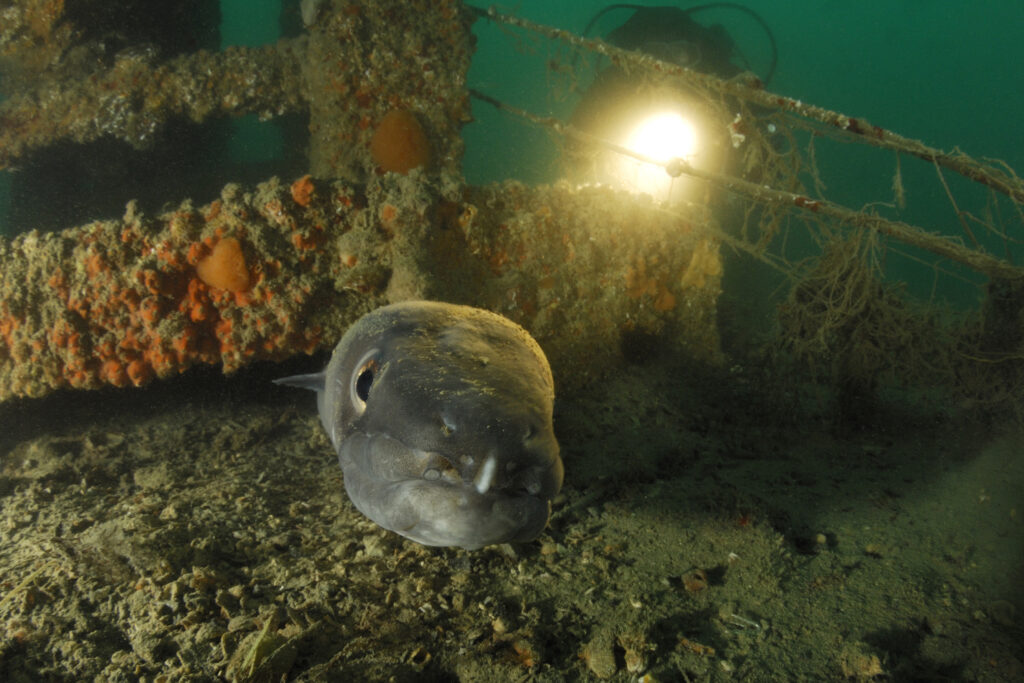
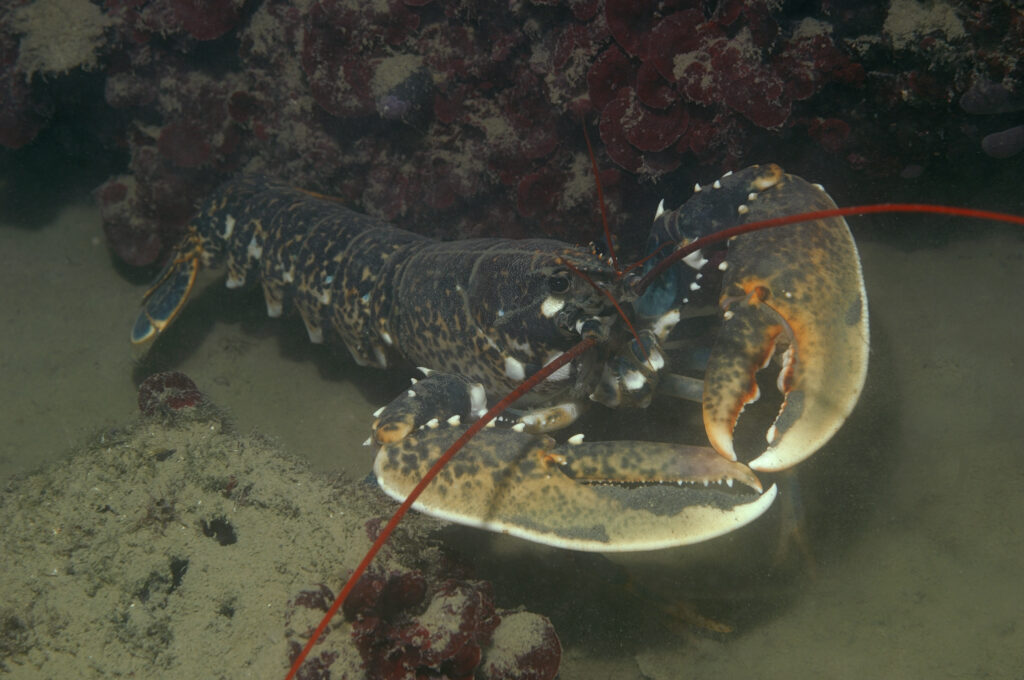
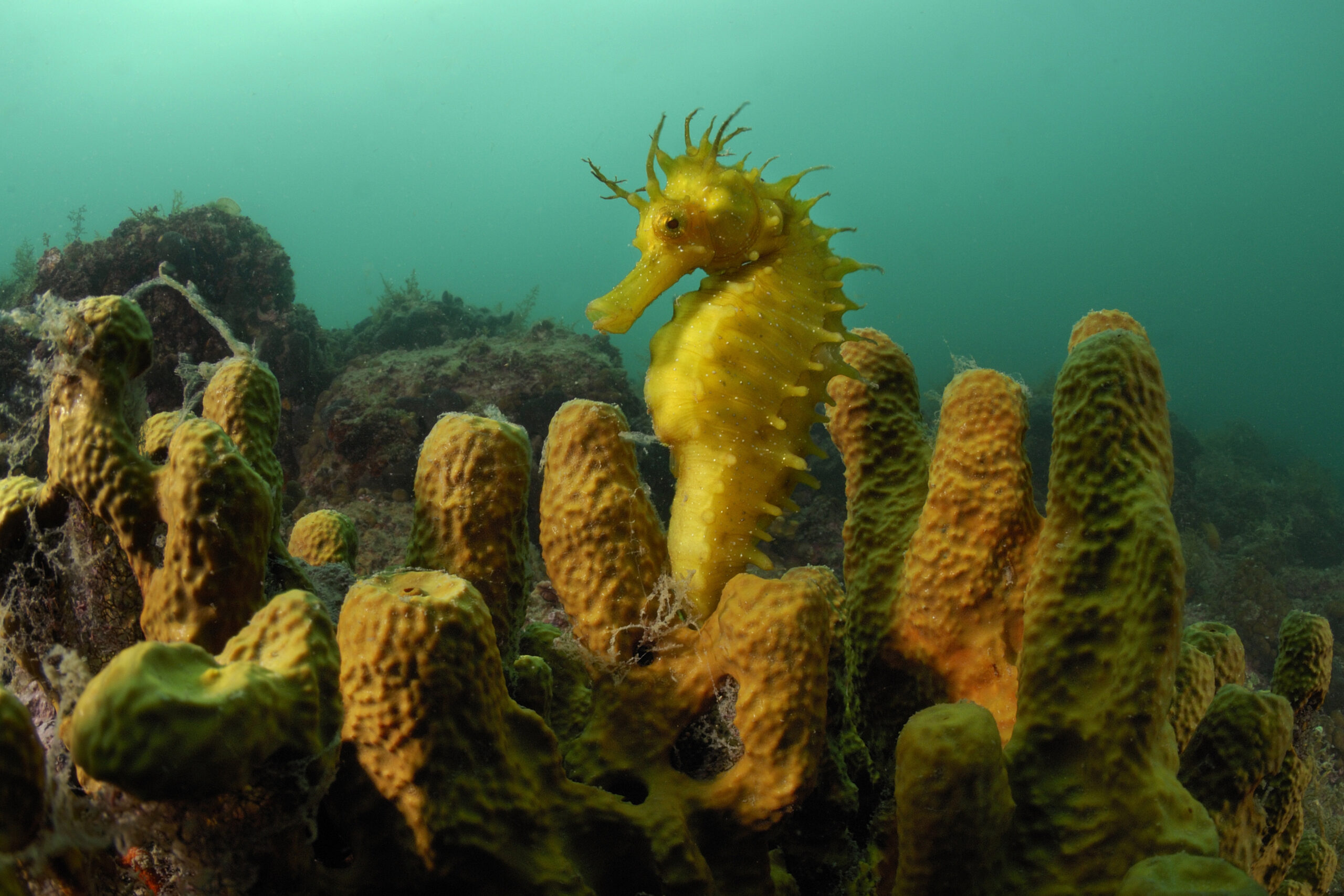
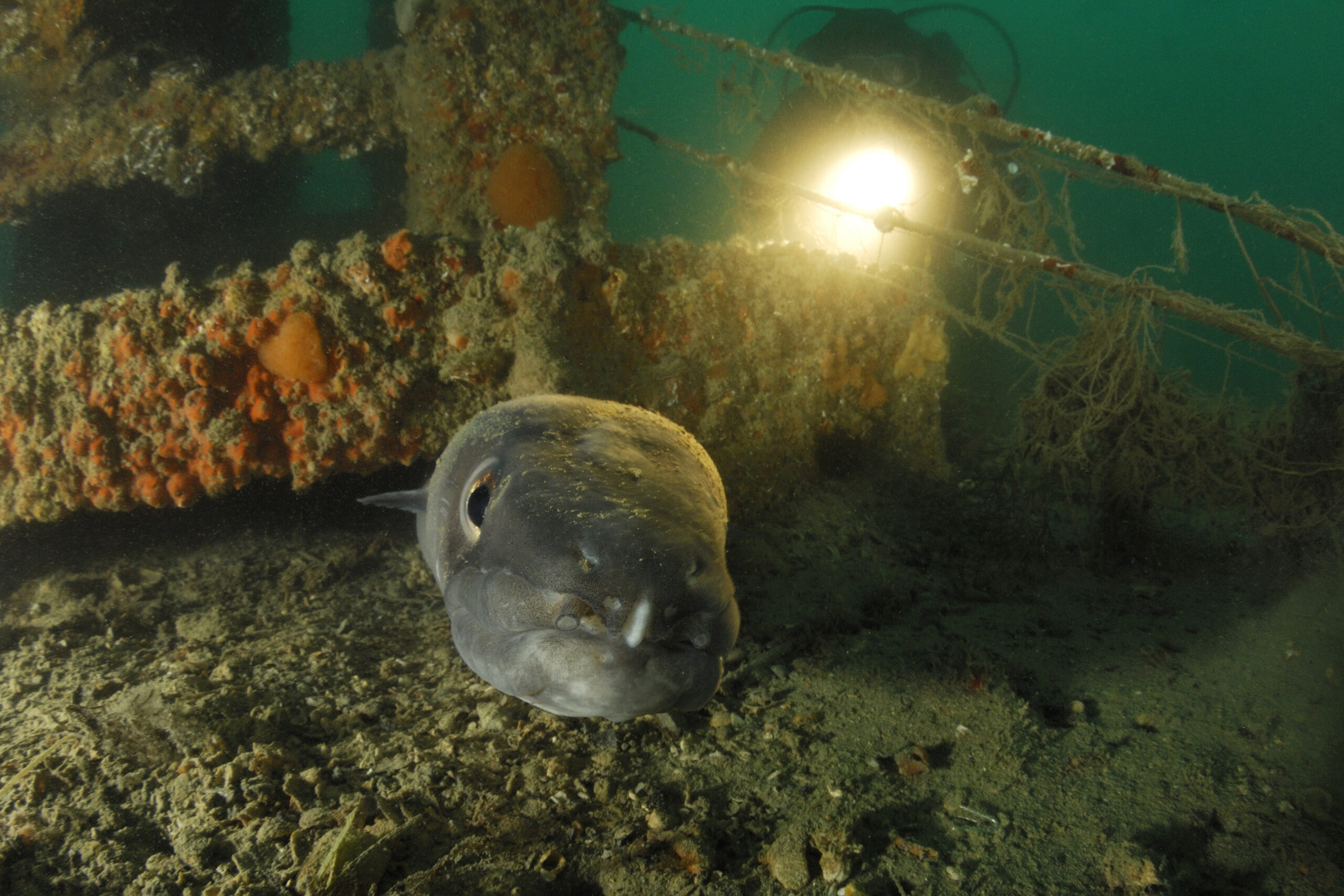
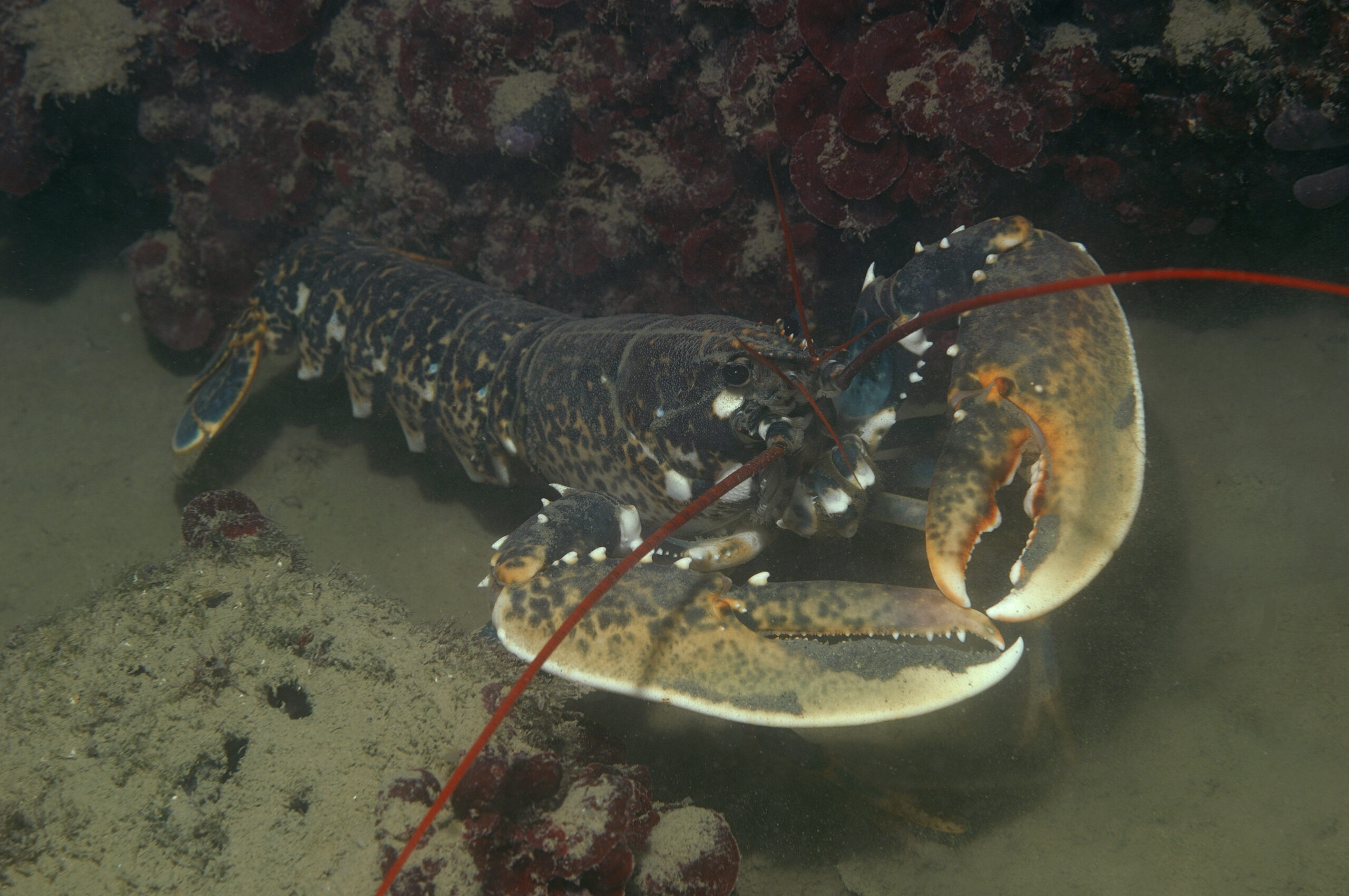
Every now and then, it is possible to spot the long-snouted seahorse (Hippocampus guttulatus), which is typically brown. However, if the area is dense with yellow tube sponges (Aplysina aerophoba), one might also encounter a completely vibrant yellow variant. In this way, it relies on camouflage to remain “invisible” in environments where the yellow sponge dominates. The cavities within and between the rocks are inhabited by European conger eels (Conger conger), while some are chosen as dens by European lobsters (Homarus gammarus) and common octopuses (Octopus vulgaris). Lingering in front of these crevices are black scorpionfish (Scorpaena porcus), relying heavily on their exceptional camouflage skills. Where the rocky face transitions into the sandy seabed, brown wrasses (Labrus merula) hunt for prey, ranking among the larger fish species found around Piran’s Punta.
Interesting facts
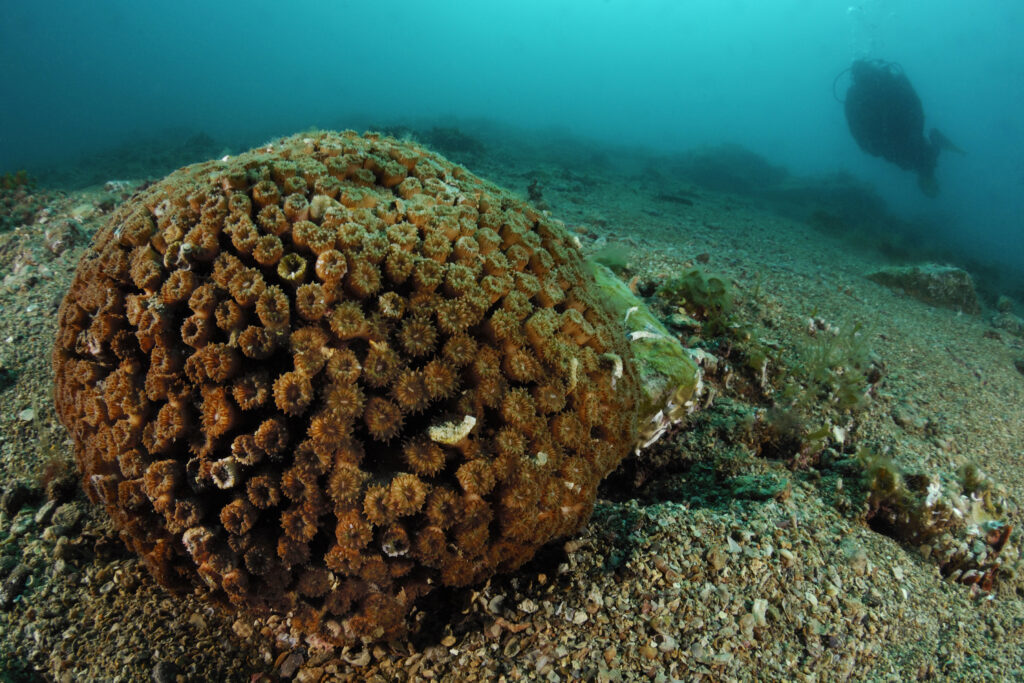
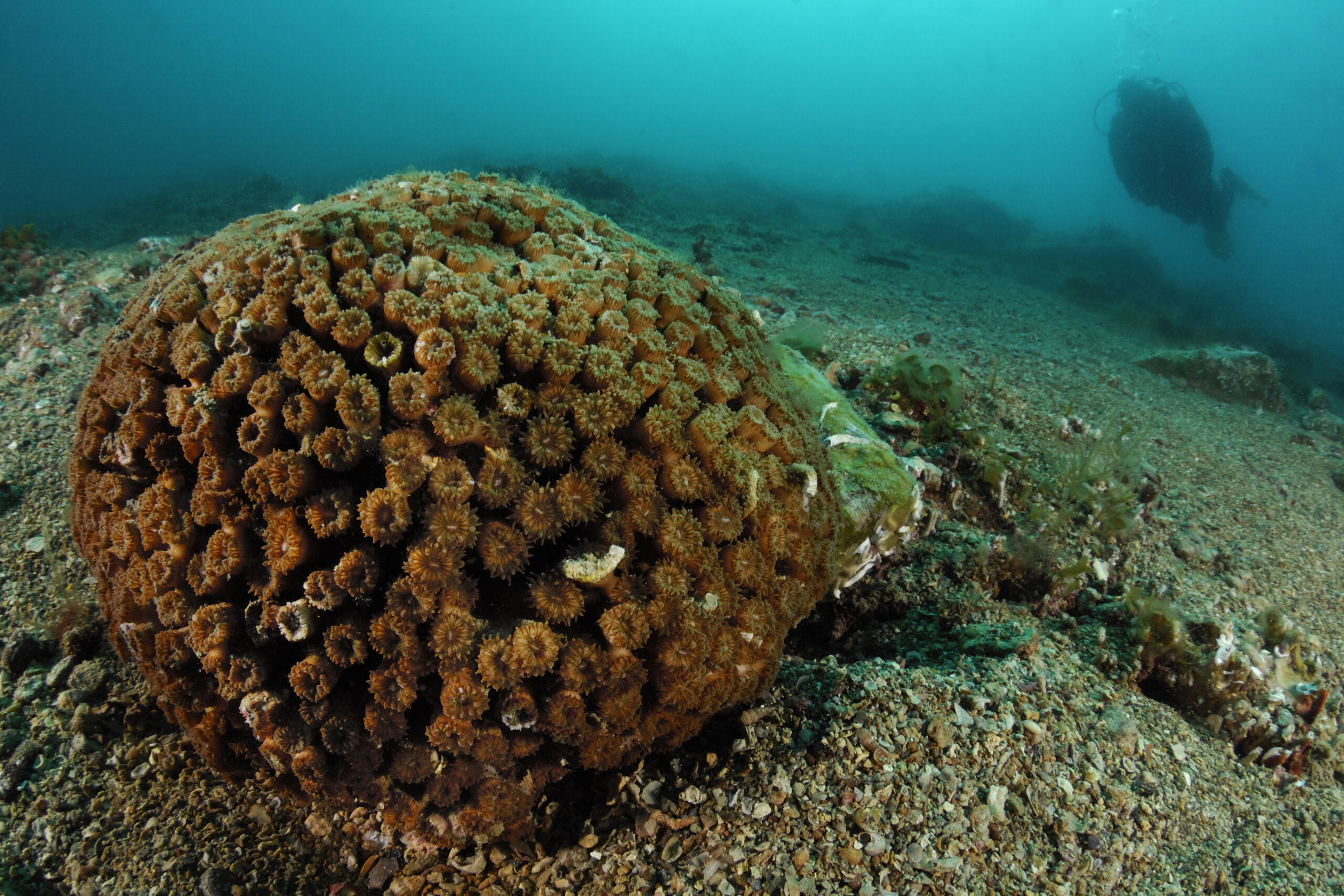
More than thirty years ago, researchers began studying the Mediterranean stony coral (Cladocora caespitosa) in this area. This species is considered one of the most important reef builders in the Mediterranean, while simultaneously being listed on the Red List of Threatened Species by the International Union for Conservation of Nature (IUCN). Right here at Piran’s Punta, it forms a distinct biological community formally known as the Cladocora caespitosa facies, where the species occurs in a remarkably high density of colonies.
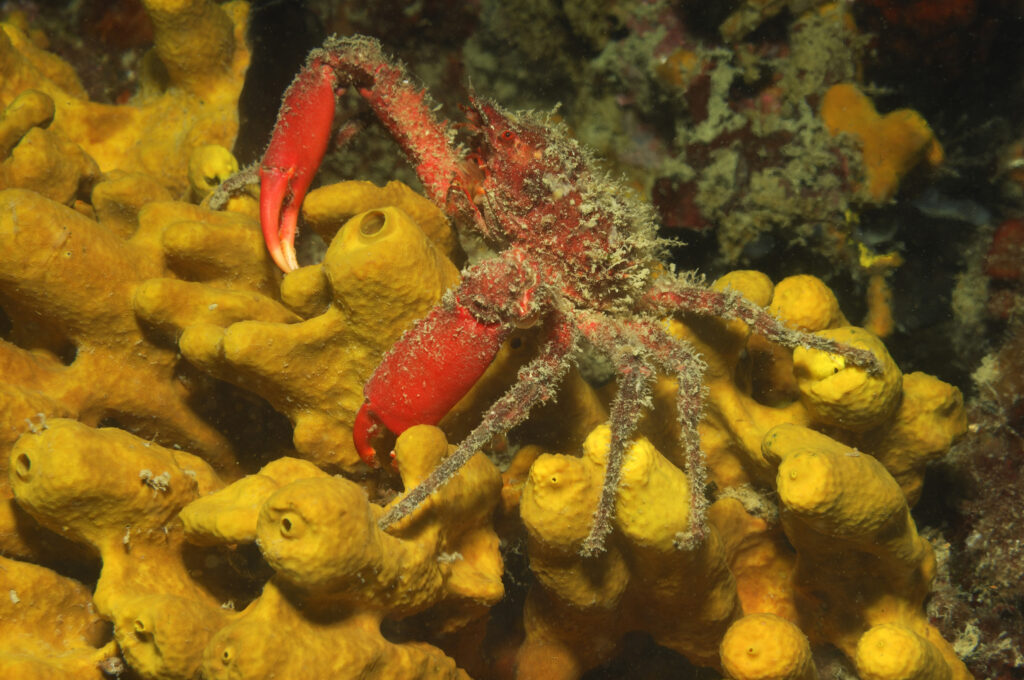
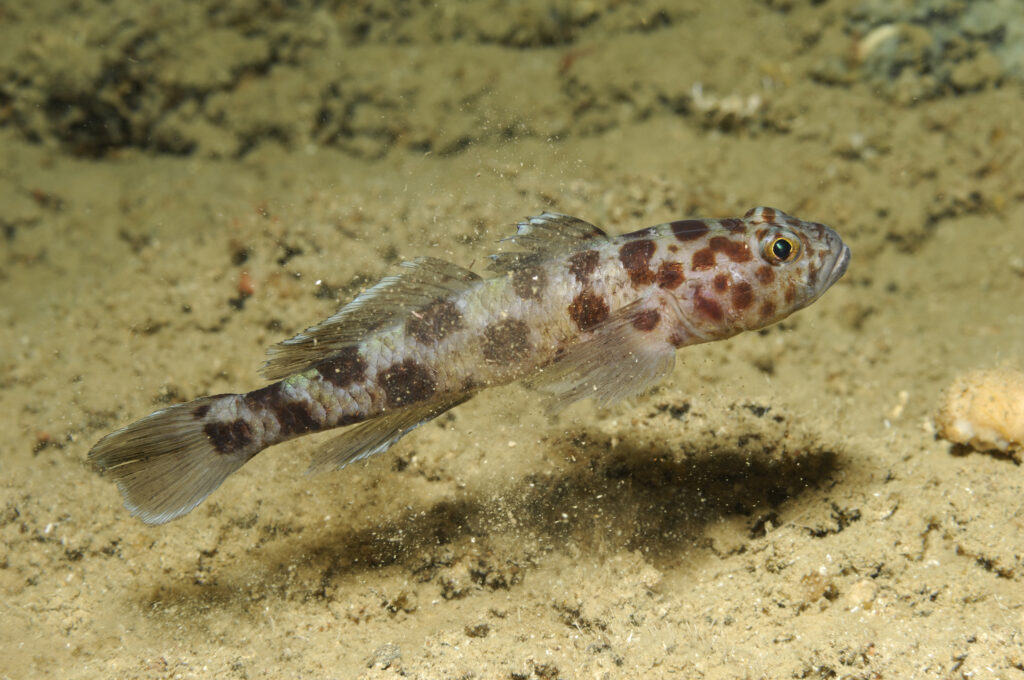
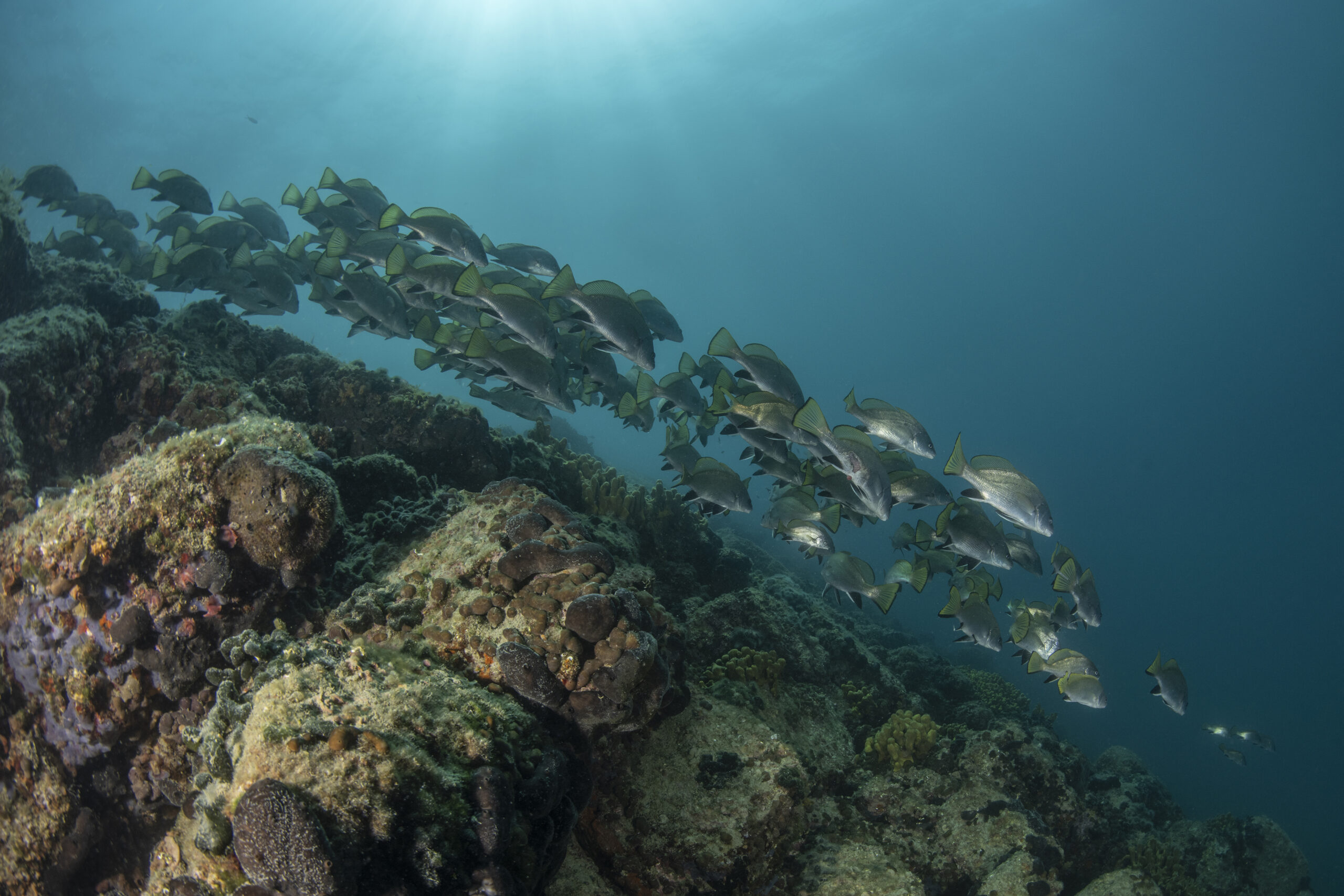
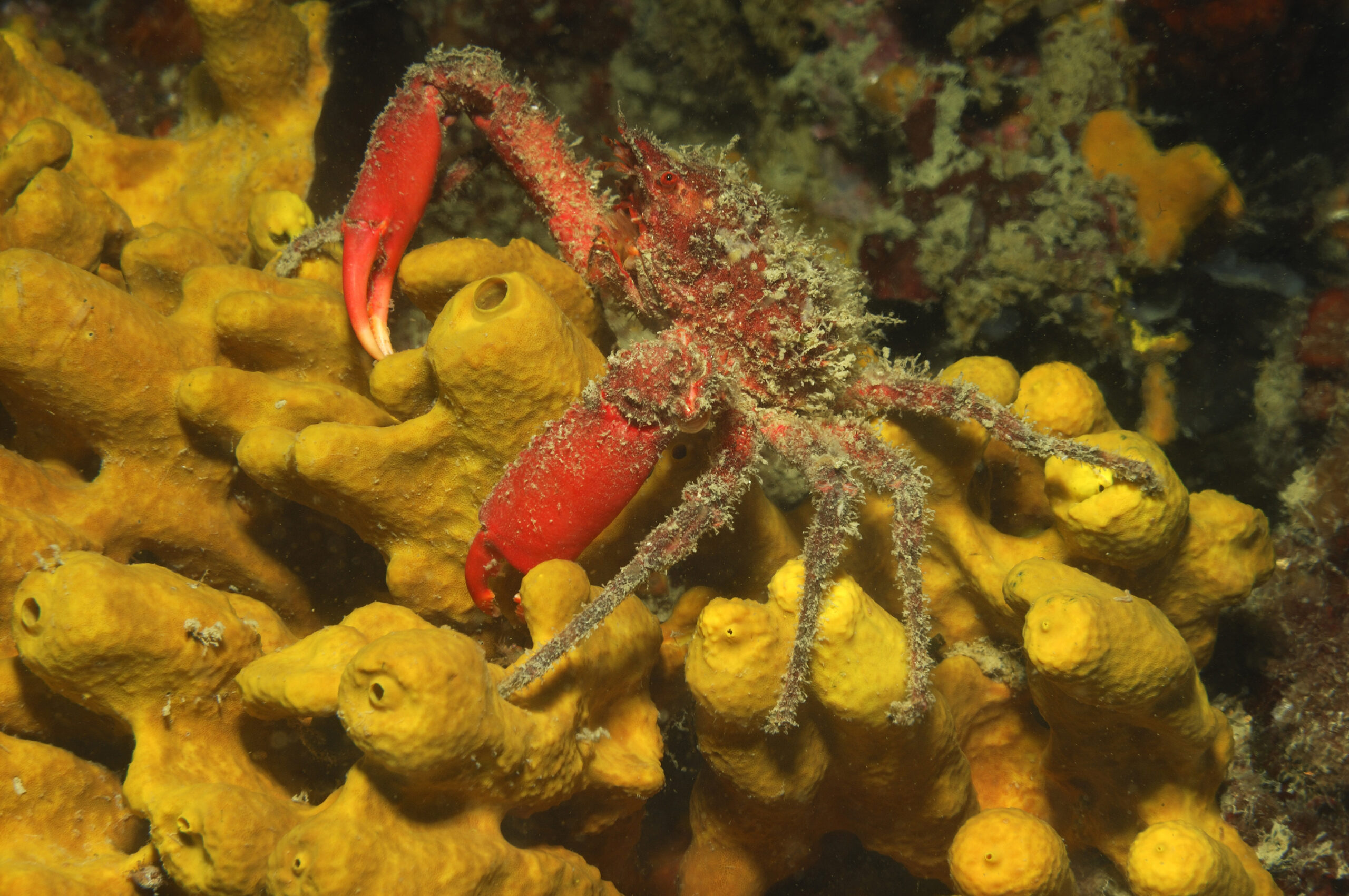
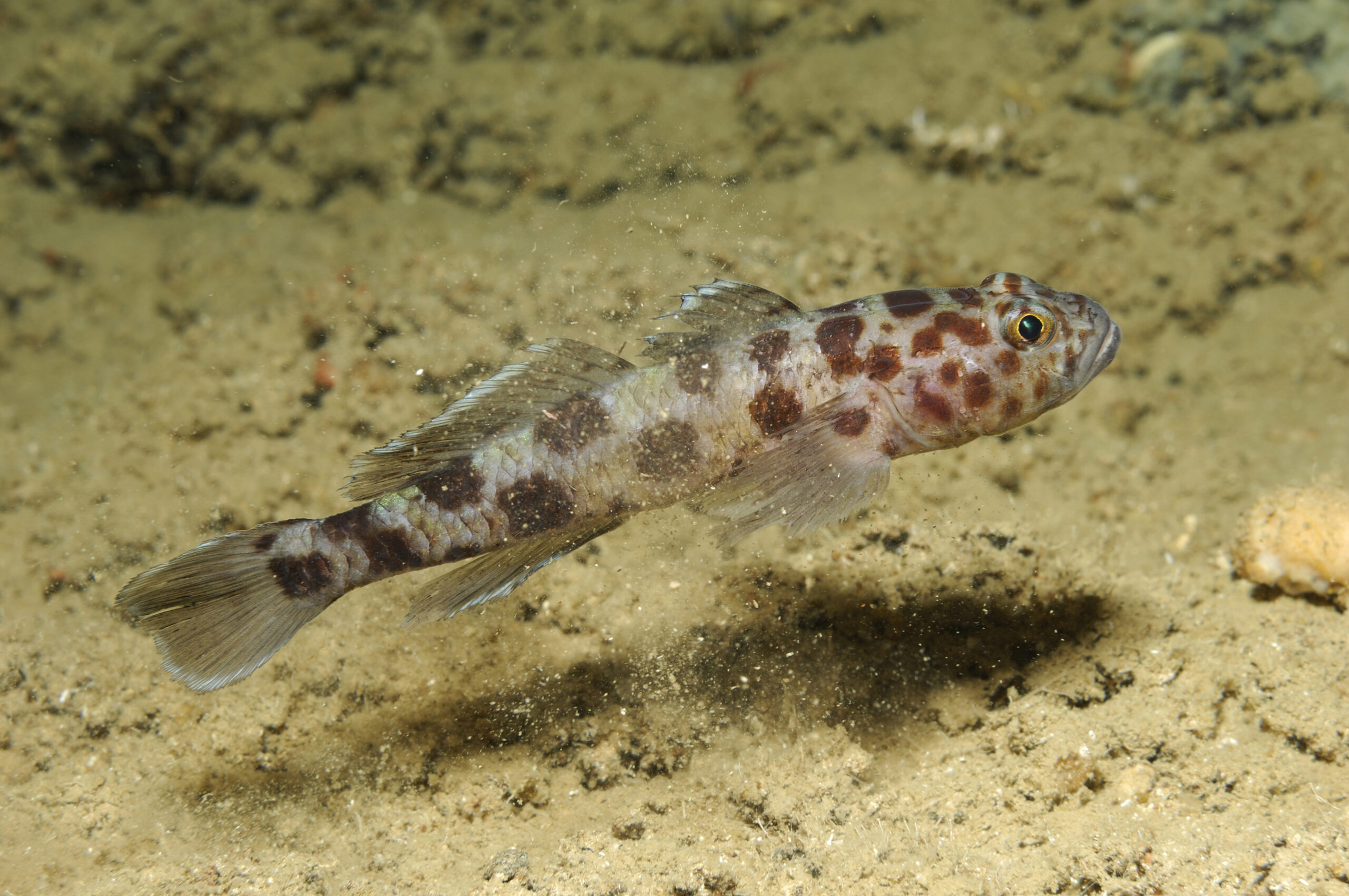
The most iconic species of Piran Punta is the brown meagre (Sciaena umbra), a relatively large brown fish that gathers in large schools where the rocky seabed transitions into sediment. If divers become too intrusive, they quickly retreat into the cavities and larger spaces between the rocks. Inhabiting the labyrinths of these rocky caves is also the rare, completely red thorn-back crab (Herbstia condyliata). Another notable feature of Piran Punta is the presence of several rare goby species. A prime example is the leopard-spotted goby (Thorogobius ephippiatus), which resides exclusively in larger rock cavities with a sandy floor.
It is reasonable to expect that future research in this still incompletely surveyed area will continue to bring to light new insights and findings, further justifying the protected status of this jewel of Adriatic marine biodiversity.
Invitation
As you stroll along Piran’s Punta, stop by the information board and the stone relief in front of lighthouse Cape Madona, which reveals how Punta flows from land into the seabed. For an underwater experience of the marine world, contact the divers at Punta.
How was the content in front of you created?
The information board and the stone relief of Punta are the result of the idea chosen by the citizens of Piran within the participatory budget of the Municipality of Piran in 2026.
Commissioned by: Municipality of Piran, project implementation: ABAKKUM, Institute for Landscape, Culture and Art Piran.
Creative team: description of the underwater monument: Prof. Dr. Lovrenc Lipej, underwater photographs: Borut Furlan, stone relief: Miha Pečar, board content and graphics: Romana Kačič, Marco De Stefani, board production: Simon Demšar, idea and coordination: Romana Kačič.