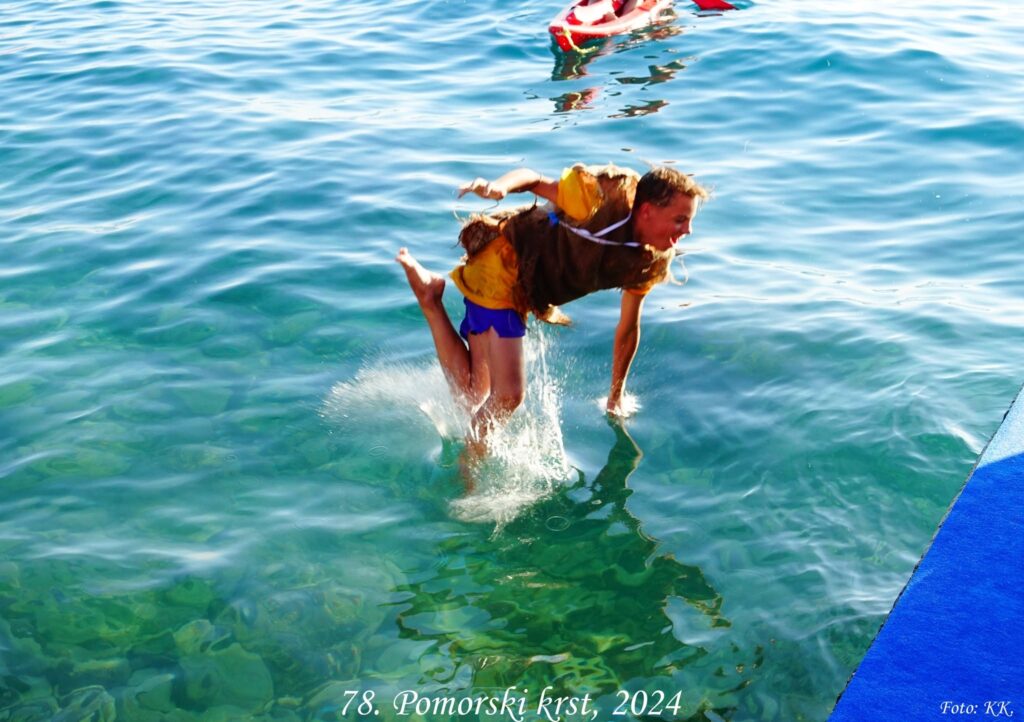
Maritime Baptism, one of the most recognisable and long-standing traditions associated with maritime education in Piran, has been entered in the Register of Intangible Cultural Heritage of the Republic of Slovenia. The Municipality of Piran welcomes the recognition of a tradition that has played an important role in shaping the identity of the town for almost eight decades, connecting generations of students, seafarers and the local community.
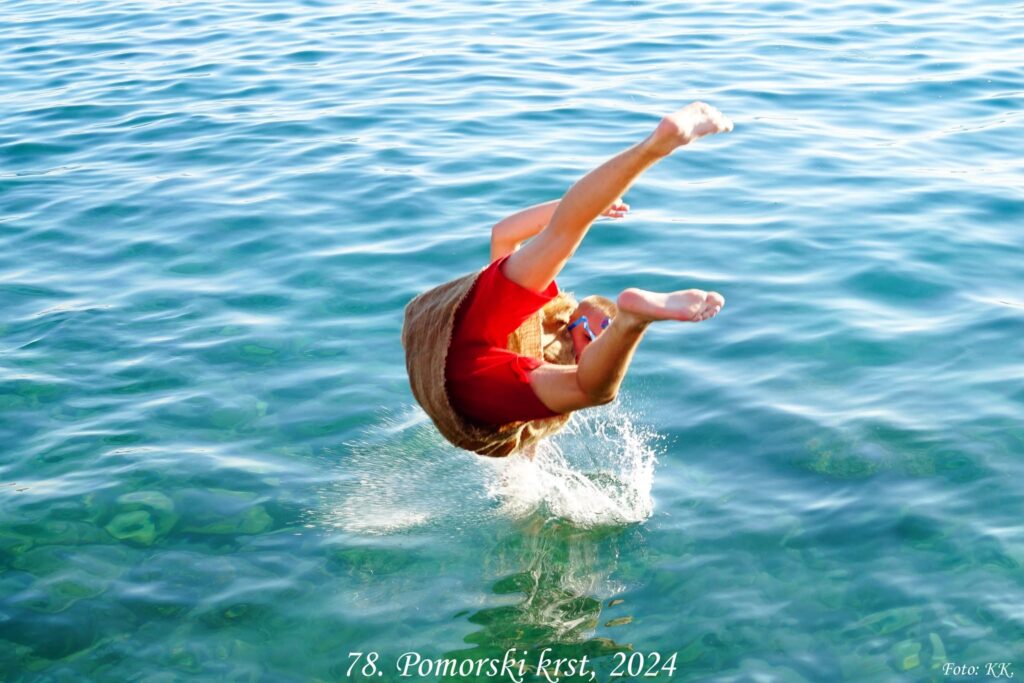
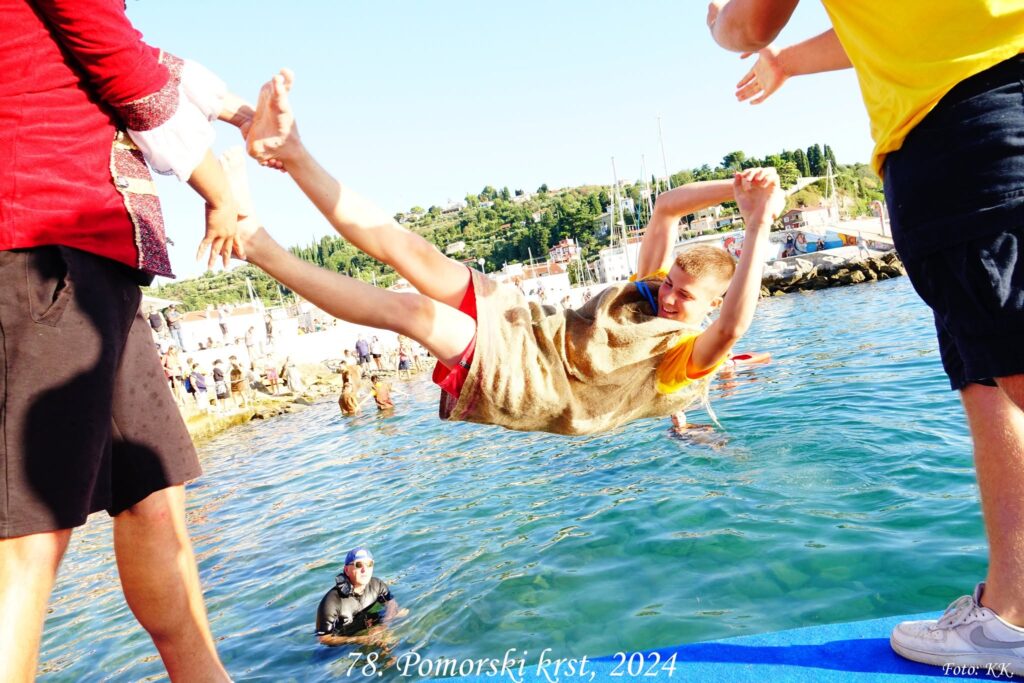
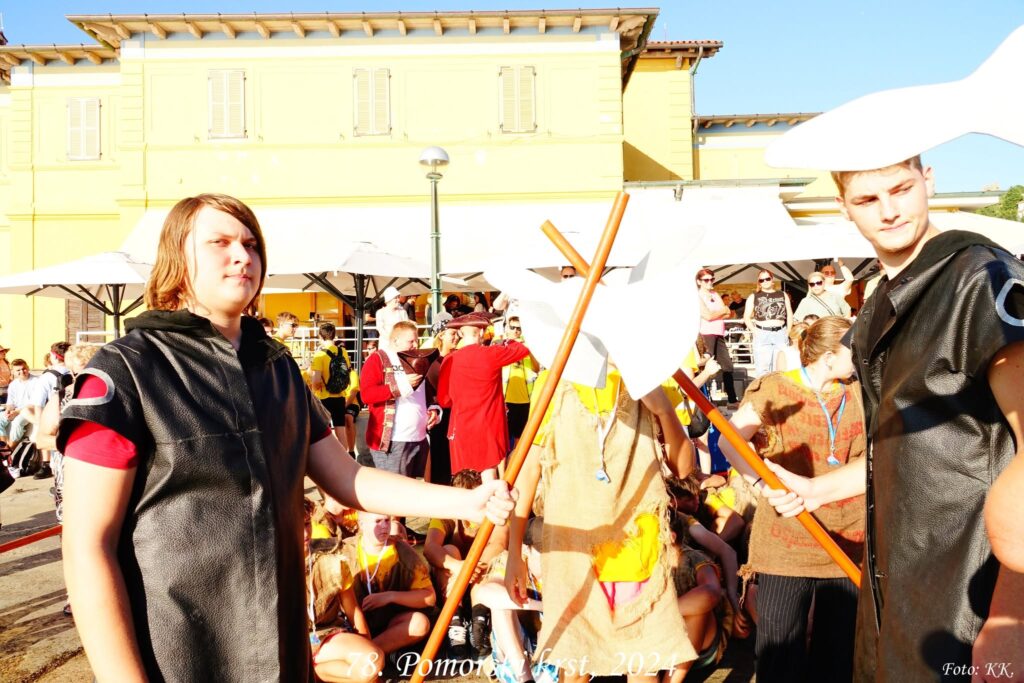
The Maritime or Neptune Baptism is a traditional initiation ceremony welcoming a new generation of students at the Grammar School, Electrical Engineering and Maritime School Piran. The multi-day event includes a parade, an oath and a baptism ceremony, during which first-year students symbolically enter under the protection of Neptune, the god of the sea, and become part of the school and maritime community. Traditionally, the event takes place in Piran and Portorož in early September.
The origins of the Maritime Baptism date back to 1947, when the Slovenian Maritime Merchant Academy began operating in Žusterna near Koper. Inspired by the initiation ceremony of miners from Idrija, students at the time organised a baptism ceremony for seafarers. Initially intended for students of maritime programmes – navigation officers and marine engineers – the tradition later expanded to students of all programmes as the school developed and introduced new fields of study.
Over nearly 80 years, the Maritime Baptism has evolved from a spontaneous student event into an important and distinctive local tradition. Today, its two-day programme extends beyond the school environment, attracting numerous visitors and bringing together students, their families, former seafarers, local residents and visitors to Piran and Portorož.
Its inclusion in the Register of Intangible Cultural Heritage represents an important recognition of the generations who have preserved the Maritime Baptism tradition and passed it on through the decades. At the same time, it confirms the significance of maritime heritage, which is inseparably linked to the history and identity of Piran.
The Register of Intangible Cultural Heritage is maintained by the Ministry of Culture, while proposals for inscription are prepared on the basis of submitted initiatives by the Slovene Ethnographic Museum, which acts as the coordinator for the safeguarding of intangible cultural heritage.
Maritime Baptism Programme:
Friday, 4 September — Neptune takes control of Piran
Tartini Square, Piran
- 10.00 – Painting workshops for primary school pupils and first-year secondary school students
- 10.00 – Creative workshops for kindergarten children
- 11.30 – Arrival of Neptune and his entourage, takeover of Piran and ceremonial raising of the pirate flags
Saturday, 5 September — Neptune baptises a new generation of seafarers
Portorož, Bernardin, Piran
- 16.00 – Departure of Neptune’s procession from the maritime school towards Piran
- 16.35 – Awaiting Neptune’s procession: musical programme in front of the Piran Harbour Master’s Office
in front of Tartini Theatre, Piran
- 15.30 – DJ Benjamin Shock
- 15.30–19.00 – Face painting with pirate and maritime motifs
- 15.30–20.30 – Food and culinary stalls
- 17.00 – Arrival of Neptune’s procession
- 17.15 – Ceremonial programme: addresses by the headmaster, guests and Neptune. Oath and traditional maritime baptism.