Step into the world of contemporary visual creativity, monastic heritage, and the musical legacy of Giuseppe Tartini.
Walk through spaces where centuries of stories, creativity, and artistic tradition intertwine, and experience Piran through its artistic and cultural identity.
THE EXPERIENCE INCLUDES:
- Entry to Piran City Gallery – a space of contemporary art.
- Entry to Tartini House – birthplace of violinist Tartini.
- Visit to the Minorite Monastery – peace and Renaissance art.
- A surprise at Piran Café – a sweet treat after your visit.

Did you know…
…that the Piran A+A Gallery was the first Slovenian gallery to regularly exhibit in global art capitals such as Madrid and Venice?
…that it was precisely the Minorite monastery where the young Giuseppe Tartini received his first musical education?
…that Carpaccio’s masterpiece in Piran was only recently returned, after it was taken to Italy in 1940 due to the threat of war?
Experience Piran through art and culture
With this ticket, you embark on a unique journey through selected cultural and artistic landmarks of Piran, where centuries of stories, creativity, and tradition intertwine.
Walk through the spaces of the Piran City Gallery, where outstanding exhibitions of contemporary art await you, then enter the Tartini House and discover the legacy of our famous violinist in his birthplace. Conclude your journey in the silence of the Minorite Monastery of St. Francis, where architectural details, the peaceful cloister, and priceless Renaissance masterpieces will captivate you.
Each location tells its own unique story, together forming an unforgettable image of Piran’s artistic soul.
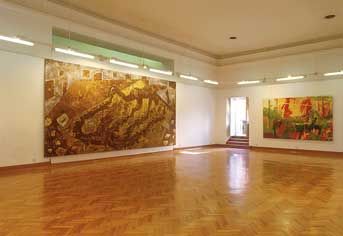
Piran City Gallery
Piran Coastal Galleries began operating in 1976, two years after their founding in 1974, with an ambitious vision and a clear strategy of connecting with the international art scene. In their early years, they established important contacts with renowned art critics and prestigious private galleries in Cologne, Paris, and Zurich, which enabled the presentation of many internationally recognized artists in Piran and elsewhere in Slovenia. In the 1980s, under the artistic leadership of Andrej Medved, they actively positioned Slovenian and Primorska visual art within the European and international context and contributed to the professional recognition of contemporary Slovenian art on the global map.
An important milestone was also the A+A Gallery, which was the first Slovenian gallery abroad, operating first in Madrid and then in Venice, further strengthening the international presence of the Coastal Galleries. Today, they manage a rich collection of artworks, including contemporary Slovenian art after 1976, collections of Primorska artists, international collections, and the Forma viva Portorož stone sculpture collection.
As the central institution in the Primorska region with the status of a regional art museum, they carry out their mission through artistic heritage and the study and presentation of contemporary regional, Slovenian, and international production. They also serve as a documentation, research, educational, and study center, organizing exhibitions, international events, seminars, and professional meetings.
Under the leadership of Mara Ambrožič Verderber, an internationally recognized curator and contemporary art expert, the institution brings strong connections with international art institutions.
The Piran City Gallery remains a key meeting point of artistic currents, where the past of rich collections meets a vision of the future. You are invited to step into a vibrant center of international artistic dialogue through its exhibition projects.
Tartini House
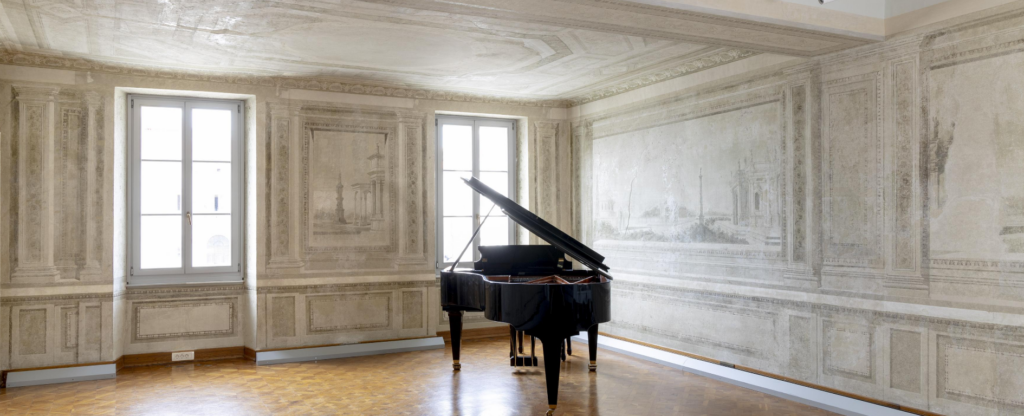
Tartini House stands in the historic center of Piran, directly next to Tartini Square, and is the birthplace of the composer Giuseppe Tartini, the town’s most prominent figure. The building dates back to the 14th century and stands on the site of the former Gothic house Casa Pizagrua, while its present neoclassical appearance dates from the 19th century. It is a cultural monument of bourgeois architecture, and following comprehensive conservation work, wall paintings commissioned by Tartini’s nephew were also restored.
Giuseppe Tartini (1692–1770), a world-renowned violin virtuoso, composer, music theorist, and teacher, left a strong mark on musical art and carried the name of Piran into the world. In his birthplace, a permanent museum collection was established in 1992, today operating under the Piran Maritime Museum. The central exhibit is Tartini’s violin from around 1720, accompanied by portraits, a death mask, a marble bust, and other personal items.
The house was renovated as part of the tARTini project, which introduced modern museum equipment and digital accessibility of content. Visitors can listen to Tartini’s music and explore his legacy in the memorial room.
Let Tartini House take you through the life and legacy of a world-famous artist. Feel the spirit of Piran as experienced by the master of the violin.
Minorite Monastery of St. Francis of Assisi in Piran
The Minorite Monastery of St. Francis of Assisi in Piran has a more than 700-year history. It was founded in 1301, and the church was consecrated in 1318, as confirmed by the inscription on its façade. Throughout the centuries, the monastery was an important meeting point of the town’s spiritual and cultural life. The friars also taught here, and among its notable pupils was Giuseppe Tartini, who received his early musical education in the monastery. Today, the complex reveals layers of Gothic, Renaissance, and Baroque architecture, bearing witness to its rich historical development.
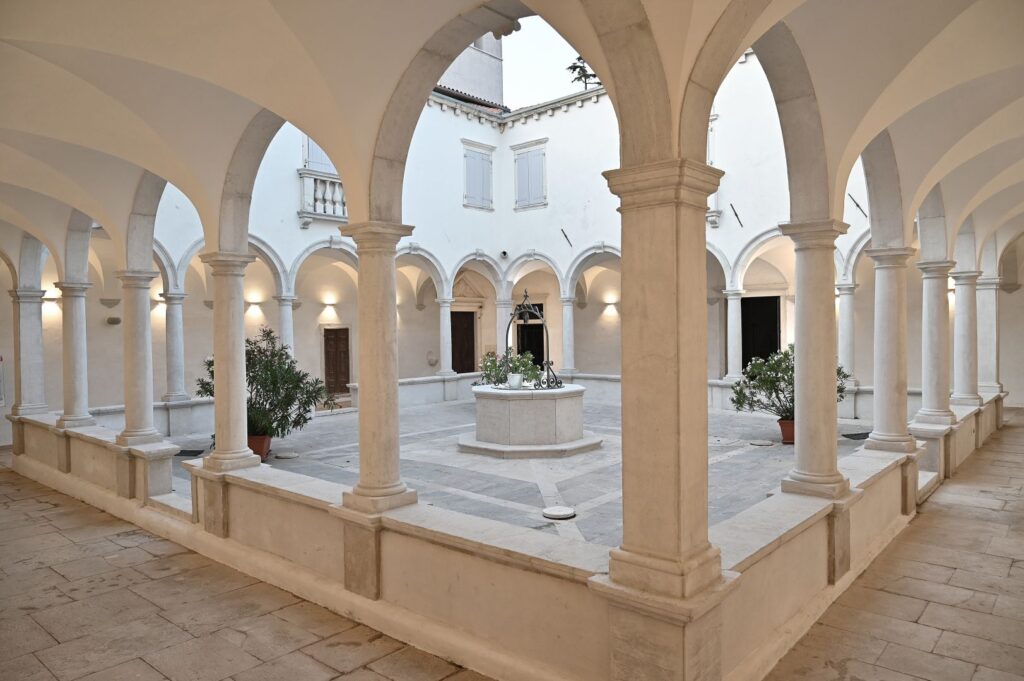
Visitors can explore the Church of St. Francis, the cloister with 24 columns, the refectory, the Minorite picture gallery, the Tartini family tomb, and the former Church of St. Catherine of Alexandria. A special experience is offered by the meditative garden with a lapidarium, where stone fragments of former architectural structures are displayed in a setting inspired by monastic garden tradition.
The central artistic treasure is the altarpiece by Vittore Carpaccio “Madonna and Child Enthroned with Saints” from 1518, designed in the spirit of the Venetian Renaissance. The painting was part of the main altar until 1787, and in 1940 it was taken to Italy due to the threat of war. After 85 years and numerous efforts, it returned to the church for which it was created, once again taking its place in the Renaissance edicula.
Step into the heritage of Renaissance masters and discover the layers of Piran’s past in one of the most beautiful settings in the town.
Easy purchase, simple use, many experiences
You can purchase the ticket quickly and easily – online or in person at any of the three tourist information centres in the Portorož & Piran destination. If you choose online purchase, a voucher or a photo on your phone is enough, which you show at the TIC, where you receive the original ticket with tear-off coupons.
With each visit to an included location, you hand in one coupon and receive a themed sticker in return. Once you collect all three, a pleasant surprise awaits you at the Piran City Café. The ticket is valid for three days from the date of purchase, allowing you to plan your visits flexibly and experience Piran at your own pace – without rushing.